Pay in installments of $5.95 with
 ,
,
 and
and

Shipping Estimate
USA
- USA
- CAN
- USA
- CAN
Ships within 48 hours · Estimated delivery Jun 30 - Jul 5
 Promo Codes Available:
For Your Every Summer RSVP, with Code: SUMMER15
Description
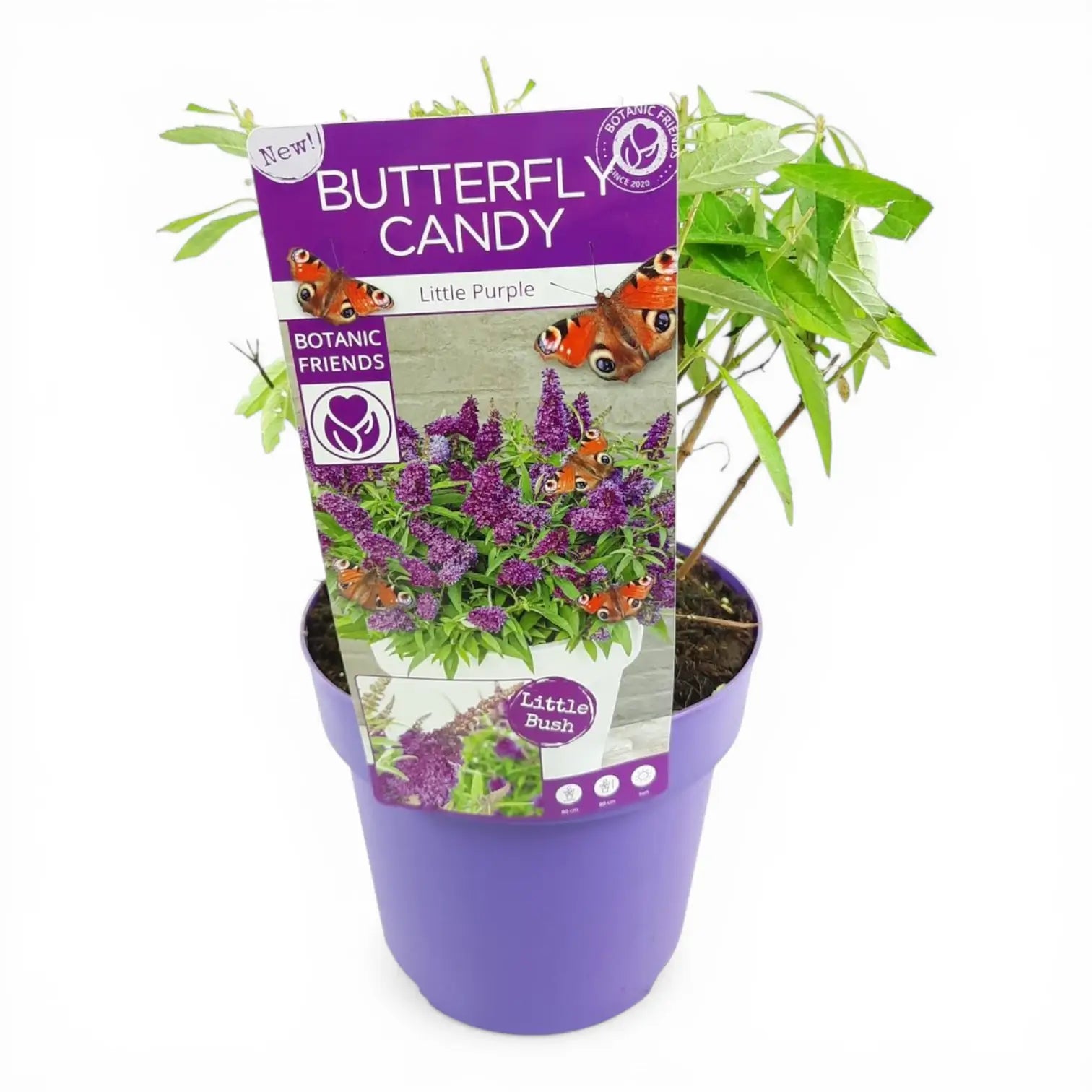
purple butterfly indoor plant Buddleja davidii Butterfly Candy 'Little Purple'Buddleja Little Purple: compact summer colour Buddleja davidii Butterfly Candy Little Purple is a compact, bushy buddleja with arching stems and narrow grey green leaves. From mid summer, the shoot tips carry cone shaped clusters of small, fragrant deep purple flowers. The shrub keeps a tidy footprint, which makes it practical for patios, courtyard beds, and smaller borders that still need a strong flowering presence. At maturity, it generally sits in
Buddleja ‘Little Purple’: compact summer colour
Buddleja davidii Butterfly Candy ‘Little Purple’ is a compact, bushy buddleja with arching stems and narrow grey-green leaves. From mid-summer, the shoot tips carry cone-shaped clusters of small, fragrant deep purple flowers. The shrub keeps a tidy footprint, which makes it practical for patios, courtyard beds, and smaller borders that still need a strong flowering presence.
At maturity, it generally sits in the 0.5-1 m range for both height and spread. In containers it stays smaller and thickens more slowly than the same shrub in open ground.
Seasonal cycle: from spring shoots to late-summer bloom
Fresh shoots extend rapidly in spring, forming the stems that will flower later. Flower cones appear on current-season growth, and the main display continues through the warm months. As autumn cools, leaves drop and the plant rests through winter, then resumes growth from the woody framework in spring.
Site selection for strong bloom
Full sun supports dense growth and heavy flowering. A warm, bright spot with shelter from harsh wind suits the shrub well, especially in exposed gardens. Soil can be loam or sand and can also be chalky, as long as drainage is good through winter.
- Sun: choose a bright position with several hours of direct sun.
- Drainage: a well-drained root zone supports healthy wintering.
- Soil fertility: moderately fertile soil produces the fullest summer growth.
Planting and soil preparation
Plant in spring or early autumn. Prepare the planting area with compost to support establishment and steady growth. Water thoroughly after planting and keep moisture even during the first season while roots explore the surrounding soil. Once established, the shrub copes well with dry spells, though a little water during prolonged heat supports longer flowering.
- Spacing: allow around 1 m per plant for mature spread.
- Mulch: a compost mulch in spring supports soil structure and moisture balance.
- Year one focus: steady moisture and light feeding helps build the framework.
Spring pruning routine
Prune in early spring, once the worst winter cold has passed. Cut stems back to a low, tidy framework so the plant puts its energy into strong new shoots. Because flowers form at the tips of current-season growth, this cutback supports a dense set of flowering stems later in summer. Remove a small number of older stems at the base if you want to refresh the framework.
Watering and feeding in hot weather
In the ground, a compost mulch and, if needed, a balanced feed in spring is usually sufficient. In pots, a slow-release feed applied in spring supports steady shoot growth and flowering. Water pots regularly through summer so the root zone stays stable, especially in hot, windy weather.
In hot, dry spells, a slow deep soak helps the plant keep building new buds and flowering stems. In borders, a spring compost mulch supports steadier moisture; on patios, watering in the morning suits pots that warm up quickly in full sun.
Pot culture
‘Little Purple’ works well as a patio shrub in a large container. Choose a pot with enough volume to reduce drying swings, and use a well-drained mix that still holds some moisture. Containers keep the plant smaller and slow down thickening, which helps maintain a neat outline in tight spaces.
- Container size: larger pots support stronger summer growth and more bloom.
- Winter position: a sheltered corner reduces exposure and protects the root zone.
- Pot insulation: wrapping the pot wall helps in prolonged cold spells.
- Winter moisture: keep the mix lightly moist during dry winter weather.
Fragrance and garden value
The flowers carry a light scent, especially on warm afternoons. In summer borders, the long flowering window helps keep the planting lively when early-season shrubs and perennials have finished. It also provides a steady source of nectar for many visiting insects during the peak garden season. On patios, the scent is easiest to notice when the plant sits close to seating.
Design notes for deep purple flowers
The deep purple tones combine well with silver-leaved plants and with bright summer greens. In borders, place the shrub where the flower cones sit against a simple background so the colour is clear. On patios, it sits well as the main shrub in a mixed pot, with trailing plants at the rim and a few upright accents around it.
Why the spring cutback matters
Flower cones form on new shoots, so the plant’s summer display depends on vigorous spring growth. A low framework after pruning produces a strong flush of stems, and each stem has the potential to finish with a flower cone. Sunlight supports this process by keeping growth sturdy and helping buds develop evenly.
Seasonal checklist
- Early spring: prune, remove a few older stems if needed, then top-dress with compost.
- Late spring: watch for steady shoot extension and water if spring is dry.
- Summer: water containers regularly; light deadheading can keep the outline neat.
- Autumn: let stems harden; leaf fall follows as temperatures drop.
- Winter: keep pots sheltered and lightly moist during dry spells.
Long-term structure and renewal
As the shrub matures, the base becomes woody. Regular pruning keeps the flowering framework productive, and removing one or two older stems at the base during spring pruning can refresh the plant’s shape. In borders, an annual compost mulch supports soil health and steady growth year after year.
Typical problems
Buddleja is generally robust. In containers, moisture swings and cold exposure around the roots are the main challenges. Aphids can gather on soft new growth in summer; strong growth and good airflow usually keeps the plant in good condition. A consistent spring pruning routine and full sun are the two biggest drivers of long-term performance.
Shipping Notes
- Free Standard Shipping on $100+ Orders to the USA.
- Except Preorder products are shipped in 48 hours.
- Delivery to the USA:
- Standard Shipping : 3-10 business days
- If time is of the essence, please consider selecting expedited delivery for faster service.
Exchange/Return Notes
- We offer a 30-day return/exchange service after receiving.
- Final sale items are not eligible for returns or exchanges.
- To process your return/exchange, please contact us at [email protected]
- Please click here for more details>>> Return & Exchange Policy